HOW TO PREPARE RECLAIMED WOOD FOR REUSE

Reclaimed wood has been adored by many people for its look. The character, history, uniqueness, and structural integrity these wood possess are features that homeowners greatly appreciate. Working with reclaimed wood be very meticulous so it will take careful planning, preparation, and patience to get the best out of the reclaimed wood that you have.

Determining the Wood Species

Just like any other wood, reclaimed wood can come from different species of wood. One good parameter in choosing what species of reclaimed wood to choose is the strength of the wood. It’s best to consult with a structural engineer to confirm that the chosen size and length of the reclaimed timber are adequate for your design. 

Staging and Material Inspection

After determining to wood species of your choice, we need to have our timbers inspected on-site. It’s best to do the inspection on a site where there is very large space for the timbers to lay out. 

There are various features that you can check on the timbers on inspection day. It can be irregular cuts and notches. It can be the ageing features of the wood. The features of your choice will entirely depend on your taste

The next step is to have a professional look on the timbers of your choice to see the structural grade of each piece. This process can take as long as five hours as the process includes poking and prodding each wood. Chunks of dry rot are removed sometimes during these inspections. The inspector will give a formal report of the inspection afterwards. 

Corn Cob Blasting and Fumigation

After the design drawings and the construction contract has been finalized, it’s time to clean and fumigate the timbers as preparing reclaimed wood for use is a very critical step. The last thing you want once reclaimed timbers are erected are loose organic particles constantly falling over from the beams. 

The first thing to do is to manually scrape the wood beams to remove any loose barks or wood chips. The next step is blast those wood beams with corn cob. This process will remove any excess bark, dry rot, and debris from the wood gently enough that it will not destroy the surface.

The last step is fumigating the wood. This is done by applying a solution of borate glycol onto the wood surface. This solution penetrates the wood and kills any bugs left.

Now your reclaimed wood is prepared and ready for construction!

Guest Contributor: Maria Espievidal

5 CREATIVE DIY BASEMENT RENOVATION PROJECTS

The best houses put every inch of space to good use, from the powder room all the way up to the master bedroom. However, basements are often overlooked. Maybe it’s because they lack natural light, or because they tend to be a little cooler in temperature. Another reason might be that many newly built homes are sold with unfinished basements. Whatever the reason is, basements tend to be neglected as viable and useful spaces.

The truth is, however, that any finished or unfinished basement has the potential to provide untapped utility. The best part is, you might not even have to hire an expert or break the bank to do it. With a little bit of creativity, you can convert this underused and underappreciated space into a private oasis.   

Here are 5 creative DIY basement renovation projects you can take on.

Home Theatre

You don’t need a 100” flat screen television or an elaborate surround sound system to create a home theatre that’s fun and cozy. Because of the lack of natural light, basements are the perfect place for a home theatre, even one that’s built on a budget. To start, installing a projector on your ceiling is as simple a drill and a few screws. You can also install a motorized or non-motorized projector screen over a wall that doesn’t have to cost a lot of money. Even simpler, if you have an unfinished basement with exposed concrete walls, you can paint one of the walls white to make it a screen.

Workshop

With some lumber, simple tools, and a little bit of handiness, you can build your own heavy-duty workshop in your basement. Some items you might want to put together include a workbench and a shelving unit for storage. You can also drill holes in a shelf as a way to store different kinds of screwdrivers. As well, a store-bought peg board and some hooks provide a great way to store your tools while showing them off. Extra touches could include a whiteboard for jotting down notes, and a work stool.

 Storage Area

Basements are the perfect place to store items you don’t need readily at hand every day. With either built-in or freestanding shelves, clothing racks, and closets, you can effectively store a lot of belongings you don’t want to look at every day. If you have an unfinished basement with exposed studs, you can easily install shelves in between these studs to create very usable storage space. You can also convert your area under the stairs that might have otherwise gone unused into storage for larger seasonal items like Christmas decorations.

thomas-litangen-SP9HcRASMPE-unsplash.jpg

Art/Music Studio

It doesn’t take much to turn the basement of your home into a loft-style space that fosters creativity. If you’re a visual artist, laying down some area rugs, placing some comfortable spaces to sit, and creating storage for your materials can transform your space into a studio. If you’re a musician, you can improve the acoustics and create a home studio feel with foam egg cartons or real acoustic paneling.

Home Gym

Looking to stay out of the gym while staying in shape? Your basement could make a great home gym without a huge investment. To make it a safe space, lay down some padded flooring, which is often as simple as cutting it with a pocketknife. From there, things like a chin-up bar and free weights are readily available online.


About The Author: Alex Capozzolo is the owner of the Brotherly Love Real Estate blog and a content writer for the real estate industry. We buy houses in Philadelphia, PA. Our focus is on helping people through one of the most important investment decisions of their lifetime by seamlessly providing fast, honest, and professional real estate services.

Guest Contributor: Alex Capozzolo

LOUSY SHOWER HABITS THAT RUIN YOUR PLUMBING

Having daily showers is part of most people’s routine. A good shower can do wonders for your mind and body. Cold showers can increase alertness, help with muscle recovery, and even improve our immune system, while hot showers can aid in detoxing your body, repair cells, and ease anxiety. 

The typical shower habits that cause damage to our plumbing are probably not the first thing that comes to your mind when you turn the knob to get the water going. Still, the way we get ready every morning can significantly affect our plumbing system. These ordinary shower routines might be beneficial, but they might also affect your plumbing. Here are some of the lousy shower habits that you should avoid. 

  1. Ignoring Small Plumbing Issues

Many plumbing problems come with different warning signs before accurate disaster strikes. It is especially the case in the bathroom, where your shower is likely to give you a fair bit of prior warning if all is not well. The constantly dripping faucets or showers may not seem like a significant problem, but it could be a hint that you need to adjust water pressure before you ruin the plumbing. 

Similarly, hot water not lasting as long as you hoped is not only annoying, but it may also be a sign of a severe problem with your water heater. It’s always better to call a plumber as soon as you notice the minor problems than to ignore and risk them escalating. You can consider installing louvered access doors and panels for you to have easy access to your plumbings during minor check-ups. 


2. Leaving Puddles on the Bathroom Floor

We might often forget to drain up small water puddles in our bathroom, especially if we’re in a rush. Leaving water on the floor of your bathroom is a recipe for disaster. That water could cause mold growth, ruin your base, and can potentially cause much more widespread problems. Investing in a bath mat and cleaning up water spills after a shower will help to prevent severe water damage. 

3. Not Removing Falling Hairs From The Drain

Obstruction in your pipes is one of the most dangerous things for your plumbing system. As time goes by, hair that accumulates in your drain can slow and eventually block the drain completely. Use a drain cover or another hair-catching device like filters, then remove the hair after every shower, so it doesn’t create potential problems in the future. 

4. Not Removing Calcium Deposits 

You might not notice it, but it can leave deposits overtime when hard water dries, blocking the showerhead nozzle and reducing water flow. But you don’t have to worry; this common issue has a straightforward solution! You can add a little white vinegar, and it can easily remove calcium deposits, improving the function and appearance of your shower head in less than minutes. 

5. Staying in the Shower for Too Long

If you enjoy taking long showers, you might want to rethink that habit because it is one of the main reasons your bathroom may be a perfect place for mold growth. The steam that builds up in your bathroom during long showers can result in mold, which is unsuitable for your family’s health. Mold can quickly spread to every edge of your bathroom if good ventilation is not present. Shower curtains and loofahs are also breeding grounds for mold and bacteria and may need regular cleaning if you’ve noticed signs of decay. 


One way to eliminate mold growth is by reducing the temperature and length of your shower. You can also increase ventilation and reduce mold by opening a window or installing an exhaust fan. 


6. Using Chemical Drain Cleaners 

If you’ve noticed a clog in your drain, whether from hair or other debris, using a chemical cleaner is the worst thing you could do for your health and your bathroom. Chemical cleaners may eliminate the clog, but they could leave you with a more severe problem. Not only are chemical cleaners bad for the environment, but they’re also harmful to your plumbing. These harsh chemicals can corrode your pipes, which can cost more than cleaning a simple clog. 

These bathroom habits may be simple, but you sure don’t want to ignore them, for it can open to more severe issues that can cause you a lot more repairs. Always remember to have your plumbings regularly checked by trained professionals. 

Guest Contributor: Chris Jackson

HOW TO SAFEGUARD YOUR PLUMBING FROM TREE ROOTS

Split drainage pipe caused by ingress of tree roots

The purpose of tree roots is to absorb and transport water and minerals from the soil to the rest of the tree. Therefore it is only natural that roots from trees and shrubs grow toward sewer lines. These pipes hold the water source that the plant needs, as well as oxygen and nutrients. Roots that find a way into a tube through a leak will grow fast and cause blockages resulting in damaged pipes. This instance is one of the reasons why regular plumbing inspections and maintenance are necessary. 

Sewage leaks are unhygienic and lead to health problems, and repairing the damage caused by the roots can be very costly. Prevent costly repair bills by taking a few precautionary measures when planting trees and maintaining pipes. 

But first, you must be aware of the signs that the tree roots are the primary culprit in causing damages to your pipes. Here are the symptoms:

  • Bad Odor
  • Sewer Flies
  • Toilet Drainage
  • Water Backups/ Overflow

If you ever noticed these signs, it’s time to get your pipes checked and take precautionary measures to prevent this instance from happening again. 

  1. Locate the Sewage Lines in Your Area

It is essential to know and locate where your underground pipes, lines, and cables run as an establishment owner. This information will help you in future potential planting or landscaping projects in your area. It is also best to limit the amount of plant present next to your sewer line to avoid problems with your pipes. 

2. Have Regular Maintenance and Inspection

When clog drains frequently occur, this can be difficult to clean and emit gurgling noises. Call a plumber to inspect the drain and sewer lines if you notice the signs. With the help of surface mount access panels, a plumber will have easy access to your drainpipes and can use a camera by running it through the pipes to locate injured areas. After the inspection is complete, the plumber will make the necessary recommendations. For regions with significant tree-root damage, you must replace the lines.

In addition, you can also clean sewer lines regularly and inspect the structure of the pipes to avoid significant sewer repairs. Regular maintenance and clearing the lines prevent root growth inside the pipes. Sewer-line care involves threading a cable through the sewer pipe that cuts through tree roots or clogs and cleans the sewer pipe to the inner walls.

3. Safeguard Your Sewer Lines

One of the most helpful methods to keep pesky tree roots out of your sewer pipes is to build a barrier between the trees and the sewer lines. There are various options available for you to create a practical hurdle. One of the common examples is by purchasing slow-release chemical solutions designed for residential properties. These chemicals help stop the growth of roots within the sewer line area, minimizing the probability of tree roots uncovering their way into the water pipes through breaks or cracks. 

You can also use metal barriers and wood by burying them about 6 inches to a foot deeper than your pipes and running them vertically along the sewer line to prevent the roots from getting into the sewer pipes.

4. Plant Wisely 

Planning your landscaping project smartly and thoroughly is the best way to avoid problems that can lead to expensive repair bills. To prevent this instance, you can limit the number of plants you place close to sewer lines. Plant more giant trees far enough away from sewer lines, so the roots are not within reach of the pipes. If you do plant near sewer lines, select slow-growing trees with a small root ball.

Your plumbing pipes are the nutrient source for tree roots. It is why it is vital to be aware of the signs and symptoms if your pipes are damaged from tree roots, for it can impose some potential health risks for your occupants. Be sure to seek help from your local plumbers if ever you notice any damages.

Guest Contributor: Chris Jackson

EFFECTIVE WAYS TO SECURE YOUR BACKYARD

Due to the pandemic, many of us have fallen back in love with your backyards, since they were the only escape from the house. But if you take a good look at your beloved outdoor space, does it look secure to you? Is it protected from burglars and other intruders? Does it offer privacy that you crave? If one of these deserves a no as an answer, you need to boost security in your backyard. Luckily, that can be done quickly and effectively with these tips.

LIGHT IT UP

First things first, make sure to illuminate your space properly, since burglars don’t like well-lit spaces. The more light you have, the easier you will catch the intruder, and everyone knows that. Get moderate-intensity floodlights with motion sensors to ensure proper security. When the sensors detect motion, they turn on and stay on for a few seconds (you can program your lights how you like it) and shut off unless they continue to detect movements. Aim your sensors at all doors, deck, patio and stairway and place them from 6 to 10 feet above the ground.

STOCK UP ON CHAINS AND PADLOCKS

Many burglars are only looking for a quick and easy loot from your backyard like ladders, power tools, bikes and such—they are not even interested in getting inside your house. If you often keep these things in your backyard in the open, it’s smart to get a few chains, padlocks and a ground anchor and secure these down. Pay special attention to your ladder, because they can be used to access other floors of the house, so they should always be secured or put away in the garage.

INVEST IN A FENCE

One of the best ways to boost security in your backyard is to get a sturdy fence. Burglars might be scared to jump over and realize they are trapped, so they will stay away from your space thanks to your fence. Make sure to find a fencing supplier with a good reputation and plenty of experience, so you know your fence will be sturdy and installed properly. With this simple move, you will add a ton of security, safety (your kids and pets will always stay safely inside), privacy and noise control to your backyard.

INSTALL SECURITY CAMERAS

Outdoor cameras are also a great security feature that will give you peace of mind during the night or when your kids are home alone. The best devices have motion sensors that capture any movement in your outdoor space. Also, some cameras can automatically alert authorities if they detect someone in your backyard. And most cameras today have phone apps, so you can monitor your outdoor space wherever you are and know exactly what’s going on there.

BE STRATEGIC WITH GREENERY

Your choice of backyard plants can make or break burglars’ plans, so make sure to be strategic when planting and pruning. If you know how, you can easily keep intruders away with your landscaping. Firstly, tall shrubbery is a perfect cover for sketchy characters, and they can use it to hide behind and watch your home or to pry open a window or door. So make sure all your foundation plants are low so no one can hind behind them.

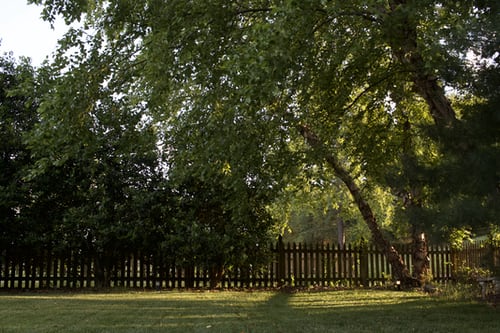
Additionally, keeping tall trees near your fence or your house can provide a hiding spot and something to climb on, so it’s best to remove these to ensure optimal safety in your backyard. Instead, focus on thorny plants around the fence and under windows (unless you have small kids who could get hurt). If breaking in through the window means going through a cactus patch or a rose bush, many will give up.

ADD A FURRY PROTECTOR TO YOUR BACKYARD

Did you know that one of the most effective deterrents for burglars is a guard dog? Big dogs are more successful in keeping intruders away, but even small ones can alert the owner and provide plenty of distraction for the bad guy. If you’re not ready to become a dog parent, buy a “Beware of Dog” sticker and put it on your gate, fence and doors—not many will stick around to check if you actually have a guard dog or not.

None of these ideas above are too big to be performed quickly, easily and with little investment, but the returns in security will be immeasurable. The safety of your family and property are worth every penny you spend!

Guest Contributor: Diana Smith

5 CHANGES YOU CAN DO TO MAKE YOUR HOME MORE ECO-FRIENDLY TODAY

It’s more important now than ever for people to do all that they can to save the environment. From years of carelessness, our environment is suffering irreversible damages; however, it’s not too late to stop these damages before they worsen. If every person made small efforts to save the environment, it’s likely that the ecosystem would see outstanding benefits, preserving the environment and the organisms that inhabit it. The best ways for people to make small efforts to save the environment can be done in the comfort of their own homes. Your home is one of the places that cause vast environmental damage without you even realizing it. This post will detail 5 ways to make your home an eco- friendly place so that you can do your part in saving the environment.

HOW CAN I MAKE MY HOME MORE ECO-FRIENDLY?

Making your home eco-friendly doesn’t have to be complicated or expensive. With minimal effort, you can make a large impact on the ecosystem. Here are 5 ways to make your home more environmentally savvy. 

  • UTILIZE SOLAR ENERGY

Solar energy is an outstanding way to make your home more eco-friendly. The most popular form of solar energy is solar panels. Solar panels absorb sunlight and convert it into electricity that can be used to power your entire home. A specialist from a company that sells solar panels in Cherry Hill pointed out that solar panels can save homeowners thousands of dollars in electricity bills per year as solar panels are a sustainable energy source. 

Solar panels can be a bit costly, and though they are an investment worth making, if you can’t afford solar panels, you should consider investing in solar lighting fixtures. These lighting fixtures work the same way, storing sunlight and converting it into electricity in order to provide light to your home. 

  • INSTALL A SMART THERMOSTAT

Smart thermostats are an important energy-saving invention to incorporate into your home. Smart thermostats work the same way as regular thermostats, however, you will now have the option to adjust them from an app on your mobile device. Smart thermostats allow you to turn your heating and cooling systems down or off when you leave the house, then back on when you are on your way home. 

Smart thermostats will save you energy and money because they no longer need to be left on when you aren’t home. You can control the temperature of your home from remote locations, allowing you to still come home to a comfortable temperature without leaving your heating or cooling system on all day. 

  • USE LED LIGHTING

Lighting fixtures use copious amounts of energy which is not only harmful to the environment, they can also end up costing you hundreds of dollars in electricity bills each month. To conserve energy when it comes to lighting fixtures, consider installing LED light bulbs. LED light bulbs use only a fraction of the electricity that standard light bulbs do and have a much longer lifespan. In addition to their minimal electricity use, LED bulbs will create less waste because of how infrequently they need to be replaced. And like smart thermostats and solar energy, LED bulbs will ultimately save you money; therefore benefiting both you and the environment. 

  • CREATE A COMPOST PILE

Compost piles are a free and easy way to give back to the environment. Compost piles are created to be used as natural soil in gardens in order to help plants grow. To make a compost pile, instead of disposing of food and waste that is organic and natural, such as fruits and vegetables, put it in a pile outside and let it decompose. After it decomposes, you will be able to use it as soil to give your plants top-notch nutrients.

You will be providing the ecosystem with natural resources to help the organisms within it thrive. And the best part? Compost piles will not cost you a dime; consider creating one in a corner of your yard or in a garbage can on your deck. Be sure not to add processed foods or dairy products to your pile as these foods will ruin it and cause it to smell.

  • REPURPOSE OLD FURNITURE

Repurposing old furniture is a simple, easy, and fun way to make your home eco-friendly. Instead of buying new furniture, consider repurposing your old furniture. Repurposing furniture will allow you to have the exact piece of furniture you have been looking for and will allow you to reduce waste. Try making this environmentally savvy task a family affair; you can repaint, refinish, or repair pieces of furniture with your significant other and/or with your children.

If you don’t have any furniture around the house that you can repair, consider buying furniture from a second-hand shop, or buying used furniture from online and repurposing that. You will be doing your part to save the environment by reducing somebody else’s waste. 

YOUR SMALL EFFORTS WILL PLAY A PART IN YOUR FUTURE

The small efforts you make at home now will have a huge impact on the future of the environment. It’s important for all humans to do their part to save the environment before it’s too late. By doing the small efforts such as the ones listed above, a bright future for the ecosystem is possible. Consider making these small changes to your home today, you won’t regret it, in fact, you will likely benefit too. Make some changes today. 

About the Author

Jennifer Bell is a freelance writer that works with All American Plumbing, a plumber in Sicklerville. Jennifer is also a blogger, dog-enthusiast and avid beachgoer operating out of Southern New Jersey

Guest Contributor: Jennifer Bell

5 SURPRISING REASONS TO REGULARLY WASH YOUR WINDOWS

Windows play an integral role in not only the value of your home, but to how you interact with the world around you. Windows let in the sunlight, and allow you to look out at your surroundings. 

But dirty windows not only look unsightly, but they can actually cause lasting damage to your home and health. So while cleaning your windows does wonders for making your home look its sparkling best, regularly washed windows also come with the following surprising benefits.  

CLEAN WINDOWS IMPROVE YOUR CURB APPEAL

If your windows are dirty, they’re one of the first things prospective home buyers will notice about your house. That’s not a good thing. If you’re concerned about maintaining your home’s value, “curb appeal”, or how your home looks to an outside observer, is a hugely important factor. 

Just as an unkempt lawn might lead people to undervalue your home, dirty windows similarly stop your home from showing its best version. But if your windows are cleaned with regularity, your home can look bright and welcoming to everyone stopping by.  

THEY KEEP YOUR HOME WARM

You might be wondering, how can clean windows help warm up your house? During cold months, though it might not feel like it, sunshine coming through your windows naturally heats up your home’s interior, lowering heating bills and bringing with it a natural warmth.

The dirt and grime from dirty windows can block out parts of your window, allowing less sunlight to enter, and thus robbing you of that natural heating. Keeping your windows cleans ensures that you get all the natural sunlight you can, which is great news for your thermostat and your wallet. 

CLEAN WINDOWS MEAN CLEAN AIR

While you tend to assume that you need to open your windows to bring fresh air into your home, a clean window, while closed, can actually help improve your air quality. When dirt builds up on windows, and sills, they often work their way into your home, lowering your air quality.

Even worse, dirt build up  occasionally can bring in mold, which can cause a host of health problems. By cleaning your windows regularly, you keep these bad particles out, and keep clean air in. 

REGULARLY WASHING YOUR WINDOWS INCREASES WINDOW LIFE

Repairing windows that have been worn down or damaged can be an unfortunate and wanted expense. Thankfully, you can keep your windows for longer by regularly washing them. 

Dirty windows build up grime and dirt that can penetrate the glass, which can stain and weaken your window and cause permanent damage. Even when you can’t visibly see debris on your window, consistently washing your windows clears the glass of microscopic imperfections that can lower the lifespan of your windows. 

By just washing your windows regularly, you can keep your windows shining for years! 

Guest Contributor: Jeff Good

4 LIGHTING TRICKS TO BRIGHTEN A DARK HOME

Does your house feel dark like a cave? If you want to brighten it, the following are some lighting tricks to brighten a dark house. These are a combination of advanced ideas and beginner tips. They will ensure you maximize what you have while bringing more light into your home. 

4 LIGHTING TRICKS TO BRIGHTEN A DARK HOME

There are four sure ways you can use to brighten a dark home. They do not require a big budget, and you can work with what you have. Read on to make your home brighter today!

1. LIGHT YOUR WALLS

Lights on walls will keep your edges bright. If you have lots of ceiling or pot lights, try installing shades that aim both down and up. LED Light Ideas recommends using a pair of sconces to make a room twice as bright, as long as the sconces have been placed strategically. 

When adding lights to a ceiling (especially pot lights), consider placing a few closer to the walls. The move will ensure the light is cast down onto the walls. It is a great way to highlight details such as brick or traditional cabinetry.

If you are looking for a sophisticated approach, make a focal point of a loved art piece by using a picture light. Table lamps are also a good option for spreading lights across the walls. Go for classic drum shades with openings at the bottom and top for the best effect. 

908de53ba9fdc79fcc2dfb98371295f0.jpg

2. USE MIRRORS

It is common for people to use mirrors to brighten a dark house. The idea is that mirrors will reflect light around the room. To get the best results, make sure your ceilings and walls are painted white. 

White bounces light, especially LED light. This means it will send more light around a house. Since white is a non-hue color, it doesn’t absorb any color. As such, it is the best way to scatter light in a dark house. 

3. USE BLUE COLORS

Compared to yellow-toned light bulbs, natural light is cool. Adding blue is recommended as it offers a crispness that is a reminder of the sky. Additionally, cool blue does not clash easily. It can work with any accent color you would like to add to the mix as part of your interior decoration. 

4. BALANCE THINGS OUT

Ultimately, a natural interplay between shadow and light is crucial for implementing lighting tricks to brighten a dark house. The lowlights and highlights from the lights and shadows are pleasing to the eye. 

No one can say they like the inside of a super-bright store that has perfectly even lighting but uses harsh fluorescents. At the same time, the right LED lights will ensure you do not spend excess money on power bills

You can add lights to brighten the dark corners of your house. However, be a bit subtle and avoid overdoing it. A few shadows are important. They give your home a sense of life and means your space has depth. This is what makes your house feel like a home.

CONCLUSION

If you are thinking of making your house brighter, there are a plethora of options you can use. Take note, not every guide you get will give you the results you want. You need to take into consideration the interior of your home before you make any decision. 

You can use the four tips mentioned above. However, make sure you balance them out. Use each tip where appropriate. For some people, using all four will work in their house. For others, it will not. Find a balance for using the above lighting tricks to brighten a dark house to make sure you get the best lighting for your home. 

Guest Contributor: Allen Michael

BATHROOM UPGRADES THAT SAVE WATER

Bathrooms use a lot of water. In fact, this is the room that uses most of the water in your home. The toilet accounts for 26.7% of all water usage, on average. The shower adds 16.8% to that figure. The interesting part of this is, while you can’t avoid using water, there are ways to upgrade almost every fixture you have to reduce water usage.

Below, we’ll cover the bathroom upgrades that will go easy on your water bills and the environment — while turning your bathroom into a more beautiful, contemporary space.

Choose a Low-Flow Toilet

Modern toilets use a lot less water than older ones while providing plenty of flushing power. In 1992, a U.S. law was passed that mandated all new toilets sold within the U.S. to use 1.6 gallons of water per flush or less. Contrast that with older toilets, which can require twice or even four times as much water — 3.5 to 7 gallons of water per flush. You can see where replacing those older toilets can save a lot of money while upgrading the look of your bathroom.

Replace Your Showerhead With a Low-Flow Showerhead

This is an inexpensive upgrade that you can install — and it could save you many times over on your water bill. On average, if you took seven-minute showers 25 times per month, a regular showerhead flowing at 2.5 gallons per minute would use 440 gallons of water. Replace it with a low-flow model that uses about 1.5 gallons per minute? That number drops to 262 gallons per month, which saves you roughly 2,000 gallons each year.

Opt for a Low-Flow Faucet, Too

Similarly to showerheads, you can install low-flow faucets to help rein in water usage. Though the bathroom faucet isn’t among the largest water users in the bathroom, this still chalks up to big savings. Standard faucets use about 2.2 gallons per minute, but if you get a water-saving faucet, it could consume between 0.8 and 1.5 gallons per minute.

Rethink the Bathtub

Hot baths are undeniably a relaxing luxury — but they also use a lot of water. The average bathtub will need between 25 and 50 gallons for a fill — whereas a 10-minute shower with a water-saving showerhead will use roughly 25 gallons of water. The first thing that you can do where the bathtub is concerned is to treat baths as a luxury. It’s perfectly fine to indulge once in a while, but daily baths can drive up your water usage.

Another great way to reduce water usage during baths is to replace your tub with a water-saving bathtub. These are quite unique in that they’re designed to hold less water than a traditional bath while giving you the same comfort. Essentially, they’re designed to fit the contours of the human body, which allows you to soak while using far less water.

Combine New Fixtures With Good Habits

The upgrades mentioned above will save a lot of water yearly, making them well worth the investment. They’ll enhance the look of your bathroom, too, replacing old and worn fixtures with new, stylish ones. 

Past that, you can save even more water by combining your updated fixtures with good habits:

  • Make sure to shut the bathroom faucet off when you’re not actively using the water. In other words, don’t let the water just run while brushing your teeth.
  • Minimize shower time and treat baths as a luxury to ease water usage.
  • Regularly check your plumbing. Leaks account for up to 13.7% of water usage within the home. If your toilet keeps running, faucets drip or pipes seep, that is water being wasted. It may not seem like much, but it adds up over the course of a year. Worse, plumbing leaks could cost you even more if they go unnoticed long enough to cause rot or some other kind of damage to your home.

Saving water means investing wisely in fixtures. Nowhere is this more important than in the bathroom, which is the biggest water consumer in any home. Consider upgrades to bring your water bills down and to give your bathroom a much-needed update.

Author bio: Erica Garland is Content Marketing Manager at Modern Bathroom and has 15-plus years of experience in the bathroom renovation industry. Modern Bathroom sells a variety of products you would need for any bathroom renovation project. With such a large selection of vanities, faucets, sinks, toilets and showers, Modern Bathroom is sure to have the perfect piece to give your bathroom an updated look.

WATER-WISE GARDENING ADVICE: HOW TO SAVE WATER IN YOUR YARD AND GARDEN

Countries around the world have seen persistent drought-spells and dam reservoirs hitting their lowest points in decades, and in some cases, water-restrictions have become a common occurrence. In times like these, it’s crucial for everyone to re-evaluate their water priorities and reconsider ways of protecting their gardens as they are the ones taking the hardest hit. 

Reducing water usage in gardens doesn’t necessarily mean letting your plants wither and die. It simply means being water-wise and resourceful which may require more work and preparation, but such an investment will pay off by helping both the environment and your pocket. 

Here are several water-saving tips to help your garden and yard stay healthy.

PREPARE YOUR SOIL

The key to maintaining a water-efficient garden lies in understanding the soil, good planning and its preparation. Each type of soil is different and can be improved in many ways. Compost helps water retention by adding nutrients needed for plants to grow better and stronger. 

Good-quality organic matter will improve the structure of your soil and with mulching, the flowerbeds and the area around your trees and shrubs will also prevent water evaporation during dry spells. You can also use water crystals for the same purpose and with the addition of water-retentive granules to your compost, even more moisture will stay locked in the soil. 

When it comes to your lawn, there’s no reason to panic if you notice brown or yellow spots during dry periods. When the rain returns, it will quickly recover. However, it helps to be water-savvy with your irrigation, by mowing the lawn a bit higher and giving it deep watering just once a week to boost the root system.

PICK THE RIGHT PLANTS

For a wonderful green garden that requires no excess amount of watering, after proper soil treatment, your next step is selecting the right plants that are low on water needs. Choose native varieties that can withstand dry spells and lots of sun, and add trees and tall plants for cooling shade. There are lots of plants that have evolved in dryer climates and need very little water to survive, such as lavender, verbena, mimosa and palm trees. 

WATER YOUR GARDEN AT THE RIGHT TIME

Many homeowners over-water their gardens which is not only wasteful but it also demands more work. You can easily prevent this by checking your soil at spade depth – if it’s moist, leave it be. It also depends on your soil type. If it’s clay, it may seem damp whether it’s been irrigated or not, and sandy soil can seem dry even if it has been watered. In these situations, inspect your plants for signs of water stress. If you notice leaves changing color or position, it may signify water shortage. 

USE THE RIGHT AMOUNT OF WATER

Using the right amount of water depends on your soil type. Heavy soils need less watering than light sandy ones whereas clay-based soils need lots of water but can be watered less often. The common rule for plants to stay healthy and keep growing is giving it up to 24 liters per square meter once a week.

CHOOSE THE BEST WATERING TECHNIQUES

The right watering technique will also help you maintain your garden well. You can opt for sprinklers for your lawn and unplanted areas as they have great coverage. To target specific sections of your garden, it’s best to use watering cans and hoses. They might be more labor-intensive, but they’re also very precise.

Seep hoses allow water to slowly seep through holes in the hose and being buried under soil and mulch, less water will evaporate. An automated irrigation system is the most expensive option, but it’s also one of the most effective and water-saving options as it limits the amount of water used by letting it drip slowly and only when you program it to do so.

COLLECT RAINWATER AND REUSE OLD WATER

Even in the dryer parts of the country, it’s possible to collect large amounts of rainwater from your house roof. It’s not easy to store large amounts, but if every home in the country managed to collect around 160 liters that would give 4 billion liters of free water that can be used for garden watering.

Another way to be water-savvy is to use greywater (from showers, washing up and washing machines). By way of diverters, this greywater can be used efficiently in your garden. Household soaps aren’t harmful to plants, but do avoid using water that contains bleach, dishwasher salt or any strong chemicals.

Maintaining a lush and healthy garden in hot climates can be challenging, but with these tips, it’s possible to grow a beautiful garden you can truly be proud of and enjoy year-round!

Guest Contributor: Kurtis Wilcox