Flooding is a natural disaster that can devastate communities, infrastructure, and economies. As climate change fuels more frequent and devastating floods, the demand for reliable flood protection solutionshas increased even more. Among these solutions, flood barriers are pivotal in safeguarding lives and properties.
This article outlines the importance of flood barriers, available types, and their role in comprehensive flood protection strategies.
Understanding Flood Barriers
Flood barriers are structures designed to prevent or reduce the impact of floodwaters on an area. They can be permanent installations or temporary solutions deployed for a flood event. The primary function of these barriers is to block or redirect water flow, thereby protecting vulnerable areas from inundation.
Types of Flood Barriers
There are various types of flood barriers, each suited to different scenarios and levels of risk. These include:
Permanent Flood Barriers: These are robust, fixed structures built to provide long-term protection. They are used in high-risk areas where flooding is frequent. Examples include levees, dikes, and flood walls. These barriers require investment but offer reliable protection for critical infrastructure and densely populated areas.
Temporary Flood Barriers: These barriers are deployed in response to imminent flood threats. They are portable and can be quickly assembled and disassembled as needed.Temporary flood barriers, like sandbags and water-filled barriers, offer flexibility and can be used in various locations depending on the immediate risk.
Demountable Flood Barriers: A hybrid between permanent and temporary solutions, demountable barriers can be installed permanently but can be removed or reconfigured when not needed. These are used in urban areas where aesthetic and functional flexibility is required.
The Role of Temporary Flood Barriers
Temporary flood barriers are a crucial component of flood protection solutions. They provide a rapid response option when permanent structures are not feasible or during unexpected flood events. Key benefits include:
Flexibility: Temporary flood barriers can be quickly deployed in diverse locations, making them ideal for unpredictable weather patterns and varying flood risks.
Cost-Effectiveness: Compared to permanent installations, temporary barriers require less upfront investment and can be reused multiple times, making them a cost-effective solution for communities and businesses.
Ease of Storage and Transport: These barriers are designed for easy storage and transportation, allowing for quick mobilisation and deployment.
Implementing Flood Protection Barriers
Implementing an effective flood protection barrier requires careful planning and consideration of various factors, including:
Risk Assessment: The first step is understanding the flood risk in a particular area. This involves analysing historical data, weather patterns, and topography to identify vulnerable zones.
Barrier Selection: Based on the risk assessment, choose the appropriate type of flood protection barrier. Permanent barriers are ideal for areas with consistent flood threats, while temporary barriers are suitable for less predictable scenarios.
Community Involvement: Engage the local community in the planning and implementation process. Public awareness and participation are crucial for successfully deploying flood protection solutions.
Maintenance and Monitoring: To ensure their effectiveness, regular maintenance and monitoring of flood barriers are essential. This includes routine inspections, repairs, and readiness drills for temporary barriers.
Reviewing Environmental Impact
Flood barriers can have environmental implications. Consider:
Eco-Friendliness: Opt for barriers made from sustainable materials that have minimal environmental impact.
Impact on Ecosystems: Assess how the barrier may affect local ecosystems and wildlife. Ensure that the installation and operation of the barrier do not disrupt natural habitats.
Innovations in Flood Protection Solutions
Advancements in technology have led to innovative flood protection solutions that enhance the efficiency and effectiveness of flood barriers. Some notable innovations include:
Smart Barriers: Equipped with sensors and automated systems, smart barriers can detect rising water levels and activate automatically, providing real-time protection without human intervention.
Modular Barriers: These barriers can be assembled in various configurations to adapt to different flood scenarios, offering versatile flood solutions.
Eco-Friendly Barriers: Designed with sustainable materials and minimal environmental impact, these barriers protect while preserving natural ecosystems.
Consulting Experts and Community Involvement
Engaging with experts and involving the community can provide valuable insights:
Expert Advice: Consult engineers, hydrologists, and flood protection specialists for professional recommendations tailored to your specific needs.
Community Feedback: Involve residents in the decision-making process. Their firsthand knowledge and experiences can help them choose the most effective flood barrier.
Conclusion
Flood barriers are an indispensable component of modern flood protectionstrategies. Whether permanent, temporary, or demountable, these barriers provide crucial protection against the devastating effects of flooding. By understanding the types of barriers available and implementing them effectively, communities can enhance their resilience to flood risks. As climate change exacerbates flooding events, investing in robust and innovative flood protection solutions will be essential to safeguard lives, properties, and economies.
As the crisp autumn air begins to settle and the leaves turn to fiery shades of orange and red, Halloween enthusiasts everywhere start to prepare for one of the most exciting aspects of the season: decorating their homes. Halloween house decor has evolved far beyond the simple jack-o’-lantern on the porch; it’s become an art form, a way to express creativity and immerse yourself, and others, in the eerie spirit of the holiday. Whether you’re aiming for spooky, whimsical, or downright terrifying, there’s a myriad of ways to transform your home into a Halloween masterpiece.
The Front Yard: Setting the Scene
The front yard is the first thing people see, so it’s essential to set the tone here. For a classic, spooky vibe, start with a graveyard scene. Tombstones, skeletons, and eerie fog machines can create a chilling atmosphere. Adding some strategically placed spotlights can make shadows dance and highlight your ghoulish displays. If you’re aiming for something more family-friendly, consider incorporating inflatables of popular Halloween characters or themed scarecrows dressed in fun costumes.
For those who love a good scare, interactive decorations like motion-activated zombies or witches that cackle when someone walks by can add an element of surprise. Don’t forget about your door—it’s the gateway to your haunted house. Adorn it with a creepy wreath made of black feathers, faux bones, or spiders. Hanging a spooky sign like “Enter if You Dare” can add to the thrill.
The Porch: Welcoming the Brave
Your porch can serve as a transition from the outside world to your haunted haven. Deck it out with creepy lanterns, string lights shaped like bats or pumpkins, and cobwebs strewn across railings. A life-sized witch or a ghoul sitting in a rocking chair adds a touch of realism to the scene. Pumpkins are a must, whether you carve them with terrifying faces, paint them in Halloween colors, or arrange them in a stylish display.
For a more immersive experience, consider playing eerie sound effects or Halloween-themed music. The sound of distant howls, cackling witches, or creaking doors can set the mood as trick-or-treaters approach. If you have steps leading up to your porch, line them with mini pumpkins, lanterns, or even glowing skulls for a dramatic effect.
Windows: A Glimpse into the Unknown
Windows are the perfect place to create a sense of mystery and suspense. Silhouettes of witches, ghosts, or zombies can give the impression that your home is inhabited by otherworldly beings. You can purchase ready-made window clings or create your own using black construction paper. Adding backlighting with flickering candles or LED lights can make these silhouettes come to life.
If you want to go the extra mile, create a window display that tells a story. Set up a scene with animatronic figures, eerie lighting, and props that hint at what’s happening inside. For example, you could create a mad scientist’s lab with bubbling potions and glowing green lights or a haunted dollhouse where the dolls move on their own.
Indoors: The Heart of the Haunt
Inside your home, the possibilities for Halloween decor are endless. Transform your living room into a haunted parlor with antique-looking furniture, velvet drapes, and cobwebs draped over every surface. Add some creepy touches like a crystal ball on the coffee table, a candelabra with flickering candles, or a bookshelf filled with “cursed” books.
For the dining room, create a haunted feast with place settings that include skull goblets, black lace tablecloths, and a centerpiece made of twisted branches, candles, and faux ravens. Consider using dim, colored lighting to cast an eerie glow over the room. If you’re hosting a Halloween party, you can even incorporate themed food and drinks, like a punch that looks like a witch’s brew or cupcakes decorated with candy eyeballs.
Bedrooms and bathrooms shouldn’t be overlooked either. Swap out your regular bedding for something in deep purples or blacks, and add a few creepy throw pillows. In the bathroom, consider adding themed hand towels, soap dispensers shaped like skulls, or even a shower curtain that looks like it’s been splattered with blood.
DIY or Store-Bought? Finding the Balance
While there are countless Halloween decorations available in stores, adding some DIY elements can make your decor truly unique. Handmade wreaths, painted pumpkins, or customized signs can add a personal touch to your display. For those who love crafting, Halloween is the perfect time to experiment with new ideas and create something one-of-a-kind.
However, don’t shy away from store-bought items either. With so many high-quality decorations available, mixing store-bought pieces with DIY projects can create a balanced, cohesive look. The key is to choose items that fit your theme and complement each other.
Conclusion: Unleashing Your Inner Halloween Artist
Halloween house decor is more than just a way to celebrate the season—it’s an opportunity to unleash your creativity and transform your home into a place of wonder, fear, or whimsy. Whether you prefer subtle elegance or full-on fright fest, the key is to have fun and let your imagination run wild. After all, Halloween is the one time of year when it’s perfectly acceptable to turn your house into a haunted spectacle. So grab your cobwebs, your cauldron, and your creativity, and start decorating!
As the air cools and leaves begin to turn, it’s time to embrace the cozy, inviting spirit of fall by transforming your front porch into a warm, welcoming space. Fall décor isn’t just about pumpkins and hay bales—it’s an opportunity to express your love for the season through creativity, color, and texture. Whether your style is rustic, modern, or somewhere in between, these ideas will help you create a front porch that radiates autumn charm.
1. Start with a Warm Welcome: Fall Wreaths
Your front door is the focal point of your porch, so start with a wreath that captures the essence of the season. Opt for a wreath made from natural elements like dried leaves, berries, pinecones, and miniature pumpkins. If you prefer a more modern look, consider a wreath made of metal or fabric in rich autumnal colors like deep red, burnt orange, and gold. Adding a monogram or a seasonal message, such as “Welcome Fall,” can personalize your wreath even further.
2. Layer Textures with Outdoor Rugs and Doormats
Adding an outdoor rug or a seasonal doormat is an easy way to introduce color and texture to your porch. Look for rugs in earthy tones or patterns inspired by fall foliage. Layering a smaller, seasonal doormat over a larger rug can create depth and interest, making the entryway even more inviting.
3. Incorporate Natural Elements: Pumpkins, Gourds, and Mums
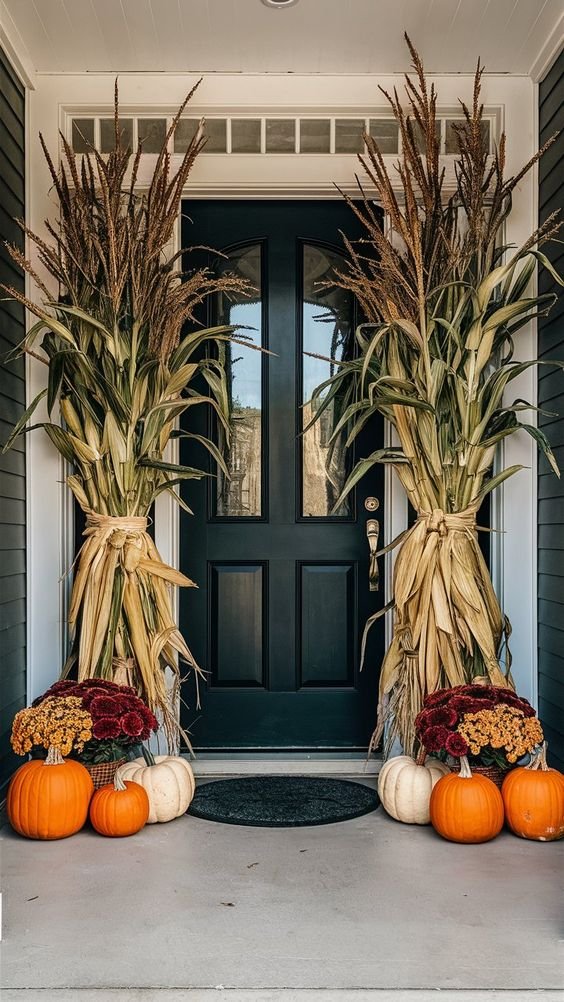
Nothing says fall quite like pumpkins and gourds. Mix and match different sizes, shapes, and colors to create a visually appealing display on your steps or around your door. Complement these with potted mums in vibrant shades of yellow, orange, and burgundy. For added interest, incorporate other natural elements like hay bales, cornstalks, and dried wheat bundles. These rustic touches add height and dimension to your display.
4. Light Up the Season: Lanterns and String Lights
As the days grow shorter, lighting becomes an essential part of your porch décor. Lanterns filled with candles or battery-operated LED lights add a soft, warm glow. Place them on the steps, along the walkway, or hang them from hooks near the door. String lights are another great option, especially when draped around railings or woven through garlands of leaves or pinecones. These lights will create a magical ambiance, especially during crisp fall evenings.
5. Cozy Up with Seasonal Seating
If you have space, adding a seating area to your front porch can make it a perfect spot to enjoy a cup of coffee on a cool morning. Opt for outdoor furniture that can withstand the elements, and dress it up with cushions and blankets in fall colors. Plaid patterns and rich fabrics like flannel or wool add warmth and comfort. Even a simple bench with a few decorative pillows can make a big impact.
6. Add Personal Touches: DIY and Vintage Finds
Personalize your fall porch décor with DIY projects and vintage finds. Consider crafting your own wooden signs with seasonal phrases like “Harvest Time” or “Autumn Blessings.” Vintage crates, baskets, and old-fashioned watering cans can be repurposed as planters or decorative accents. These unique touches will give your porch character and charm.
7. Don’t Forget the Final Details
Small details can make a big difference. Consider adding a fall-themed mailbox cover, a festive door knocker, or a seasonal flag. A basket filled with pinecones, acorns, and dried leaves can serve as a simple yet effective decoration by the door. These final touches will pull the entire look together and ensure your porch is autumn-ready.
Conclusion
Decorating your front porch for fall is a wonderful way to celebrate the season and make your home feel warm and inviting. Whether you go all out with elaborate displays or keep it simple with a few key pieces, the goal is to create a space that reflects the beauty and coziness of autumn. With these ideas in mind, you’re ready to turn your porch into a stunning seasonal showcase that welcomes guests and celebrates the splendor of fall.
Whether you want to design a relaxing oasis, create a tranquil entertainment retreat, or boost your home’s curb appeal, settling for the most suitable hardscape elements is crucial. This will enable you to not only create a captivating and cohesive outdoor space but also elevate your lifestyle. Let’s explore the top six essential elements of a spectacular outdoor living space.
FIRE PIT
Creating a fire pit area is the perfect way to ignite ambiance and add a cozy and warm atmosphere to the entire outdoor space. The gentle glow paired with dancing flames provides that cozy retreat you need to unwind on chilly evenings. You also get a unique focal point for family gatherings.
Expert contractors like those from Coughlin Concrete can help you design a custom fire pit to suit your preference, from a stone and classic brick fire pit design to a modern metal design. Consider surrounding the fire pit with comfortable seating to make the area more functional and support conversations with an intimate gathering.
OUTDOOR KITCHEN
An outdoor kitchen is an essential feature if you enjoy cooking and entertaining guests. It offers all the conveniences and functionality of a traditional kitchen while you enjoy your meals in the fresh air.
With proper design and planning, your outdoor kitchen can be stylish and functional and increase your home value. To enhance food preparation, incorporate features such as a sink, built-in grill, ample counter space, and refrigerator.
WATER FEATURE
You can set the mood and infuse tranquility into your outdoor living with water features, such as ponds, bird baths, fountains, or waterfalls. As water flows, its gentle sound creates a soothing backdrop that triggers a serene atmosphere instantly, boosting the overall outdoor experience. Water features are also highly versatile, and you can tailor them to align with your design aspirations and landscape’s scale.
PATHS, WALKWAY, AND DRIVEWAY
Enhance the practicality and aesthetics of your outdoor oasis with pathways and a driveway. Have a well-defined path that leads to the front entrance, a hidden seating area, and lush garden.
Sleek concrete pavers can be ideal if you like a modern touch, while brick or flagstone can go a long way in infusing rustic charm to the space. Add elegance, ambiance, and safety to your driveway and walkways with proper landscape lighting and gentle curves.
RETAINING WALLS
Investing in retaining walls can enhance the dimension and depth of your landscape design. Most homeowners use materials such as concrete blocks, timber, or stone to create retaining walls that complement outdoor aesthetics.
You can use retaining walls to define backyard zones, set up terraced gardens, and establish cozy seating near a fire feature. Consider adorning them with built-in lighting and cascading plants to transform them into stunning focal points.
DECKS AND PATIOS
Decks and patios are at the heart of the outdoor experience, adding valuable square footage and distinct charm to your living space. Your choice of material dictates the overall ambiance. When it comes to decks, you can opt for wood to create an inviting warmth or stone to establish a rustic allure. For patios, choose materials like pavers, concrete, and natural stone for unlimited design possibilities and durability.
You have all it takes to transform your outdoor space with hardscaping elements. Choose the right design, materials, and professional installation to design aesthetically pleasing, functional, and durable features.
Moving can be overwhelming. From packing to hauling heavy furniture, it’s easy to feel swamped. That’s where professional movers come in. Companies like Owens Brothers Transfer Inc., a trusted name in Reno moving and storage, can turn a stressful move into a smooth transition. But what exactly makes hiring expert movers the smart choice?
Cost Efficiency
Hiring movers may seem like an extra expense. However, when you consider the hidden costs of a DIY move—like truck rentals, fuel, and potential damage to your belongings—it starts to make sense. Professionals can get the job done faster and with fewer mistakes. This saves you both time and money. Think about it: fewer broken items and fewer days spent moving mean more savings in the end.
Stress Reduction
Moving is one of life’s biggest stressors. There’s so much to juggle. Work, family, packing, and transportation all demand your attention. By hiring professional movers, you can hand over much of that burden. They manage the logistics and heavy lifting. This allows you to focus on other important tasks, like settling into your new home.
Safety First
Moving heavy items can lead to injuries. Back strains and sprained ankles are common when lifting heavy furniture. Professional movers are trained to handle these challenges. They know the right techniques to prevent injuries. Plus, they come equipped with the necessary tools. This ensures that your belongings are moved safely, and you avoid a trip to the emergency room.
Right Tools for the Job
Have you ever tried moving a large couch without the right tools? It’s not easy. Professional movers come prepared with everything needed for a smooth move. Dollies, ramps, and custom packing materials are standard. These tools ensure that your items are handled safely. You won’t have to worry about damage during the move.
Expert Packing Services
Packing is more than just throwing things into boxes. It requires careful planning and proper materials. Professional movers offer packing services that make sure your belongings are secure. They use high-quality packing materials and know how to pack fragile items. This not only saves you time but also protects your valuables. No more last-minute trips for extra boxes or tape—everything is taken care of.
Insurance for Peace of Mind
Even with the best care, accidents can happen. That’s why professional movers offer insurance options. This protects your belongings during the move. If something gets damaged, you’re covered. This peace of mind is invaluable. You can relax knowing that your items are in good hands.
Storage Solutions
Sometimes, moving dates don’t line up perfectly. Maybe your new place isn’t ready, or you need to move out before you can move in. Professional movers like Owens Brothers Transfer Inc. offer storage solutions for these situations. Their storage facilities are secure and climate-controlled. Your belongings stay safe until you’re ready for them. This service eliminates the worry of finding temporary storage.
Tailored Services
Every move is different. Professional movers understand this. They offer customizable services to meet your specific needs. Whether you need full-service moving or just help with the heavy lifting, they can tailor their services to fit your budget and requirements. This flexibility ensures a smooth move, no matter the circumstances.
Reliable and Efficient
When you hire professional movers, you’re paying for reliability. They show up on time, handle your belongings with care, and complete the move efficiently. This reliability takes the guesswork out of moving. You know what to expect, and there are no surprises. This level of professionalism makes the entire process smoother and less stressful.
The Benefits of Choosing Expert Movers Include:
1. Cost Efficiency: Saves time and money by avoiding hidden DIY costs.
2. Stress Reduction: Frees you from the overwhelming logistics of moving.
3. Safety: Reduces the risk of personal injury with professional handling.
4. Proper Equipment: Ensures safe transport of belongings with the right tools.
5. Expert Packing Services: Protects your valuables with high-quality packing.
6. Insurance Options: Provides peace of mind in case of accidents.
7. Storage Solutions: Offers secure, climate-controlled storage for your items.
8. Tailored Services: Customizes the move to fit your specific needs.
9. Reliability: Ensures a smooth, efficient, and stress-free moving process.
Choosing Owens Brothers Transfer Inc., a trusted and reliable name in Reno moving and storage, ensures your move is handled with care. Professional movers make relocating easier, safer, and more efficient. By entrusting them with your move, you gain peace of mind, save time, and protect your belongings. It’s a decision that can make your next move the smoothest one yet.
Thinking of a backyard, we always imagine a quiet and relaxing place where we can spend some quality time. However, this imagination is a dream for many homeowners in the urban setting. Their dream is often shattered by the loud urban traffic and ongoing constructions. Therefore, they are always looking for different ways to soundproof or just reduce the sound reaching their living spaces. Among the different techniques, one major thing that we usually overlook is TK Turf. This blog post highlights the impact of artificial turf in building quiet spaces. Let’s get started.
THE IMPACT OF NOISE POLLUTION ON HUMAN HEALTH
Noise pollution is created by various sources in the urban area. The nearby roads, airports, construction sites, and even the noisy neighbors are the major contributors. The short-term impacts of noise pollution are often seen in the spoiled mood and frequent headaches. However, long-term exposure can lead to serious health impairments including loss of hearing.
The impact of a noisy environment is so critical that even the World Health Organization (WHO) has declared constant exposure to loud sounds (above 55 decibels) as a major health concern. However, many of these reasons are out of our control. The only thing that we can do is to adopt various sound reduction strategies. The best thing to start is the installation of the Artificial Turf.
ROLE OF SYNTHETIC TURF IN SOUND REDUCTION
Artificial turf is not well-acknowledged for its role in the sound reduction in urban areas. However, to make things clear about the unsung benefits of the turf, here is its critical role in building the quietest urban spaces.
1. SOUND BARRIER
Your attempt at soundproofing your home may fail if there is a lot of sound flow to your home. Hence, it is important to provide barriers to the noise waves at various points to let the minimum sound waves reach inside your home. One effective way is to install the Artificial Turf which acts as a sound barrier to limit their travel to long distances.
2. NOISE ABSORBANCE
The long blades or artificial turf are not only a barrier to loud sounds but they also have the absorbance capacity. The synthetic turf absorbs the sound waves from all directions and overall dampens the noise. Hence, it leads to less amount of sound waves reaching your indoor places that you can easily overcome with soundproof curtains and other strategies.
3. ELIMINATE THE SOLID SURFACES
Many people save their time and effort and cover their entire outdoor space with hard structures. Such surfaces may enhance the curb appeal of your home but provide a solid surface for the sound to reflect and travel long distances. However, if you cover the land with Turf, its soft texture will limit the sound reflection, decreasing its intensity.
4. REDUCE SOUND PRODUCTION
The above three benefits are indeed achievable with the natural grass too. However, the natural grass is itself a source of noise pollution. The use of maintenance equipment generates hours of irritating noise which tenses our nerves. However, the artificial grass takes a lead here with its low-maintenance nature. Low maintenance means reduced use of maintenance equipment which ultimately means low sound.
ADDITIONAL WAYS FOR SOUND REDUCTION
Apart from the installation of the artificial turf, here are the ways to soundproof your lawns, so you can freely spend some quality time in your outdoor space.
Adding more soft surfaces with outdoor rugs or cushions
Strategic placement of trees to create a sound barrier
Soundproof fencing
FINAL WORDS
Never overlook your health by ignoring the long-term impact of the loud noises. The artificial grass Tampa installation accompanied by other soundproofing ways is the best strategy to reclaim your home lawn as a quiet and relaxing place. Call for the professionals now and enjoy a quick and health-boosting transformation of your outdoor space.
Many people dream of one day getting their home. As exciting as this can be, it can also be a daunting process. This makes it essential to plan well and do your research. Getting the perfect home is more than having an idea of the number of bedrooms and type of kitchen you need. If you search online, you will surely see beautiful listings and will want to attend every open house available.
However, there is more to getting the ideal house. The process can be as seamless as possible, provided you are willing to put in the effort. It may also take a long time, depending on your market.
No matter who you are: a first-time home buyer, or a getting your second house, this article contains a list of actions that can guide you in the right direction. To navigate the rental market successfully and find your dream house, do the following:
1. EVALUATE YOUR NEEDS AND WANTS
In trying to get a dream house, it’s nice to have a list of “needs” and “wants.” Of course, the difference between the two is clear. Knowing this can help you organize your list and get your priorities in line.
In defining your wants and needs, evaluate things that are important to you. For instance, view, garage, yard, location, etc. It can give you a good perspective on the rentals Nashville tn property that suits your style.
2. START BY GETTING PRE-APPROVAL FOR A MORTGAGE
One of the tasks you need to tick off your box before embarking on your search is getting prequalified for a mortgage. No matter your market, a good grasp of your budget will let you know if your dream house is within reach. When you get pre-approved, you can narrow your search based on what you have and save time elsewhere.
Getting prequalified puts you a step ahead of the game. This is because a lender already pre-approved you for up to an amount of mortgage. Sellers like seeing pre-approved buyers, so you have a high chance of success.
The pre-qualification process involves contacting a mortgage broker. You will furnish the broker with some info about your finances, which will help determine the home loan amount you can get.
3. CHECK OUT THE NEIGHBORHOOD
A house may tick all your boxes. However, if you don’t like the neighborhood, you might be miserable while staying there. This makes it essential to see if the neighborhood fits your need and lifestyle.
Do you like going to the park and enjoying the vast expanse of green grass? Then, you don’t want the nearest park to be 30 miles away. While driving around the house, ensure the neighborhood meets your needs. If you have kids of school age, you might not want them to travel for miles to get to school.
For someone still raising a family, check if the area is friendly to kids. The last thing you want is your kids playing in the street and getting run over by a drunk driver.
4. CHECK THE SIZE
The size of your house also matters as it can determine if you will be miserable or love your new place. Your family’s habits and style can influence the property that fits your need.
For instance, if you like eating lots of home-cooked meals, you will likely prioritize a good and spacious kitchen with adequate amenities. Someone who works from home will probably need an extra room that can be configured into a home office.
A traditional family that values dinnertime with everyone present will need a spacious dining room. These factors will help ensure you have a functional space for your family.
5. CLEAN UP YOUR FINANCES
A house is a significant financial commitment; many people take up a mortgage. To be successful, get rid of other debts that affect your chances.
When you repay your debt, you build your credit score and reduce your debt-to-income ratio. With a higher credit score, your chance of pre-approval is high. Someone with lots of debt who direct a huge part of their monthly income to debt repayment might not appear attractive to potential lenders. With too much debt eating out of your paycheck, there is a huge chance that you will struggle to keep up.
This means you need to keep your debt-to-income ratio low. Your mortgage application will be denied if it exceeds a certain threshold. As a result, reduce and, if possible, get rid of all debts before embarking on a house purchase journey.
6. CHECK OUT THE PROPERTY
The compound of the house should also reflect what you want in a house. Does the architecture of the house reflect your style? Do you like a fancy garage door that brings out your house’s curb appeal? These are things you need to consider when trying to buy a house.
Also, the size of the property matters, as it will determine how much you will spend on property maintenance. For instance, someone with a large yard will need to think about monthly maintenance. If you have kids who will need to play around, a house with a small yard is out of the question.
What about a swimming pool? Are you ready for the extra commitment that goes into maintaining a pool?
CONCLUSION
Getting the perfect house doesn’t have to give you a sleepless night. You will have to invest time and effort, no doubt. This article has provided a headway on how you can successfully navigate the real estate market.
Lease agreements are the cornerstone of landlord-tenant relationships, setting the terms, responsibilities, and expectations for both parties. However, the evolving needs and circumstances of landlords and tenants often lead to the use of lease addendums – supplementary documents that modify or add specific terms to the original lease. While lease addendums can be valuable tools for tailoring agreements to unique situations, they also come with their own set of advantages and disadvantages. In this guide, we’ll delve into the pros and cons of using lease addendums in your rental properties, helping you make informed decisions that benefit both you and your tenants.
Pros of Using Lease Addendums:
● Flexibility and Customization: One of the most significant advantages of using lease addendums is the flexibility they offer. They allow landlords and tenants to customize their lease agreements to address unique situations and requirements that may not have been covered in the standard lease.
● Clarity and Specificity: Lease addendums provide clarity by explicitly stating additional terms, conditions, or rules that both parties agree to. This aids in averting potential misunderstandings and conflicts in the future.
● Adaptation to Changing Circumstances: As circumstances change during a tenancy, lease addendums allow for the adaptation of the lease without the need to completely rewrite the entire agreement. This can save time and effort for both landlords and tenants.
● Legal Protection: Lease addendums are legally binding documents, meaning that both landlords and tenants are bound by the new terms and conditions outlined in the addendum. This offers legal protection for both parties.
● Tenant Satisfaction: By using addendums, landlords can address tenants’ needs and concerns more effectively. This has the potential to result in heightened tenant contentment and an increased probability of lease extensions.
Cons of Using Lease Addendums:
● Complexity and Length: Adding multiple addendums to a lease agreement can make the document longer and more complex. This may lead to confusion for both landlords and tenants.
● Risk of Overlooked Terms: With multiple addendums, there is a risk that either party may overlook or forget specific terms outlined in these documents, potentially leading to disputes.
● Future Modifications: If changes to the lease are made through numerous addendums, it can become challenging to track and manage these modifications, especially if the property changes ownership.
● Inconsistencies: Multiple addendums can result in inconsistencies within the lease agreement. This can create confusion and potentially conflict if different addendums contradict each other.
● Legal Review: Drafting and implementing lease addendums correctly requires a good understanding of landlord-tenant laws and regulations. If not done properly, they can be legally unenforceable.
Tips for Using Lease Addendums Effectively:
● Be Selective: Use addendums sparingly and only for significant changes or unique situations. Avoid cluttering the lease agreement with unnecessary addendums.
● Clear Communication: Ensure that both parties fully understand the terms of any addendum. Clear communication is key to preventing misunderstandings.
● Proper Documentation: Keep meticulous records of all addendums, including dates, signatures, and the specific changes they entail. This helps with tracking and legal compliance.
● Legal Review: Consult with a legal professional or real estate attorney to ensure that your lease addendums comply with local and state laws and regulations.
● Regular Lease Review: Periodically review your lease agreements and any attached addendums to ensure they remain relevant and up-to-date.
Conclusion
Lease addendums can be valuable tools for tailoring rental agreements to specific needs and circumstances. They offer flexibility and customization while providing legal protection for both landlords and tenants. However, their complexity and potential for oversight or inconsistencies should be approached with caution. By using lease addendums judiciously, communicating clearly, and seeking legal advice when necessary, you can leverage their advantages while minimizing potential drawbacks in your rental property management. Ultimately, the goal is to create lease agreements that are fair, transparent, and beneficial for all parties involved.
Water, essential for life and a vital component of our daily routines, can be both a blessing and a curse when it strays from its intended path. The effects of water damage can range from minor annoyance to serious structural deterioration due to broken pipes and leaking roofs.
This article shall dig into the complex realm of water damage, covering the many varieties and their effects. By the end, you will have a deeper understanding of how water can wreak havoc on homes and businesses and why water damage restoration is often necessary.
FLOOD DAMAGE: NATURE’S WRATH UNLEASHED
When nature unleashes its fury in the form of floods, water damage becomes catastrophic. Flood water intrusion may seriously ruin buildings and goods inside homes and businesses. It damages structural integrity, erodes foundations, and creates several health risks. Commercial water damage restoration becomes essential in such cases to not only salvage what’s left but also to ensure the safety of the affected area moving forward.
STRUCTURAL DAMAGE:
Water has a relentless ability to weaken and deteriorate the structural integrity of buildings. It can seep into foundations, walls, and ceilings, causing:
Foundation Cracks: Long-term contact with water can soak the ground close to a building’s foundation, causing fractures and sinking. The stability of the entire building may be compromised as a result.
Wood Rot: Wooden structures and components are particularly vulnerable. Water damage can cause wood to swell, warp, and eventually rot, compromising the building’s support system.
MOLD AND MILDEW GROWTH
Water damage creates the ideal environment for mold and mildew growth. These annoying microbes proliferate quickly once they have a foothold and like moist, humid environments. In addition to causing harm to the surfaces they are on, mold and mildew also put people’s health in danger. Mold infestations must be stopped quickly in order to prevent breathing in mold spores, which can lead to allergies and respiratory problems.
In addition to being unappealing, mold and mildew may be dangerous to your health. Residents who breathe in mold spores that have been discharged into the air run the risk of developing allergies, respiratory disorders, and other health issues.
ELECTRICAL DAMAGE
Water and electricity don’t mix well. Electrical fires, short circuits, and power outages can all result from water getting inside electrical equipment or systems. To guarantee safety, electrical damage should be repaired right away by trained personnel because it may be fatal.
Electrical damage resulting from water intrusion can have severe consequences. Because water carries electricity, it may cause short circuits, electrical fires, and power outages when it comes into touch with electrical parts.
FLOORING AND FURNISHING DESTRUCTION
Waterlogged flooring and furnishings are common consequences of water damage. Water absorption can result in warping, staining, and degradation of carpets, hardwood floors, and upholstered furniture. Since replacing these products can rapidly get expensive, water damage restoration is more economical.
Waterlogged flooring and furnishings represent a significant financial burden for property owners. The carpets’ saturation can cause warping, mold, and mildew inside the fibers. Hardwood flooring may become structurally unsound, necessitating pricey replacements.
HEALTH HAZARDS
Water damage doesn’t just harm structures and belongings; it can also jeopardize human health. Stagnant water can serve as a breeding ground for mosquitoes and other insects that spread disease. The moisture left over after a flood can also encourage the growth of germs and allergens, aggravating respiratory problems and harming the health of everyone exposed. Timely remediation is essential to ensure the well-being of occupants.
FOUNDATION COMPROMISES
In some cases, water damage can extend to a building’s foundation. Water infiltration around a foundation can result in soil erosion and settlement, resulting in fractures in the foundation and structural instability. To stop future degradation, foundation damage is a critical worry that must be addressed immediately.
Foundation damage is a hidden danger of water infiltration. Water infiltration can cause soil erosion around a building’s foundation, decreasing the structure’s stability. The structural integrity of the entire structure may be compromised due to foundation slippage and crack growth. Foundation degradation may become a costly and dangerous issue if it is ignored.
CONCLUSION
In the face of water’s destructive potential, it is essential to be aware of the damage it can cause. Water damage is a complex problem that should never be undervalued. It may cause harm to electrical systems, encourage mold growth, compromise the structural integrity of buildings, and pose health risks. Prompt and professional intervention, such as water damage restoration services, is the key to mitigating these risks.
Male Plumber Working To Fix Leaking Sink In Home Bathroom
Finding a reliable plumber in your area can feel like searching for a needle in a haystack. Whether you’re dealing with a late-night plumbing emergency, planning a bathroom renovation, or in need of boiler repairs, the importance of having a trusted professional on speed dial cannot be overstated. This comprehensive guide aims to make your search easier by providing practical tips and insights into finding a reliable ‘plumber near me’.
Specifically, we’ll be taking a close look at the services offered by RM Plumbing & Electrical, a leading provider of plumbing and heating services in Cardiff, South Wales. This company prides itself on professionalism, reliability, and competitive pricing all of which are key considerations when choosing a plumber. So, without further ado, let’s dive in and start our journey towards finding the perfect plumber for your needs.
UNDERSTANDING THE ROLE OF A PLUMBER
Plumbers are the unsung heroes of our homes, ensuring our daily routines go smoothly by keeping our water flowing, our drains unblocked, and our appliances functioning perfectly. But there’s more to a plumber’s job than just fixing leaky taps and blocked drains.
A highly skilled trade, plumbing involves an in-depth understanding of water systems, heating systems, and the intricate network of pipes that connect them all. Whether you’re renovating a bathroom or installing a new dishwasher, your plumber’s expertise ensures that waste pipes and taps are precisely where they need to be, allowing for optimal water flow and functionality.
A plumber’s responsibilities include but are not limited to:
Installing and repairing appliances: From dishwashers to washing machines, plumbers make sure these appliances are correctly connected to the water system.
Bathroom and kitchen installations: Working in tandem with architects or specialists, plumbers help plan and implement the best location for your bath, shower, sink and toilet.
Detecting and repairing leaks: This includes both water and gas systems. Quick leak detection and repair can prevent extensive water damage and potential health risks.
Unblocking toilets and drainage systems: A blocked drain or toilet can cause serious disruption to your daily routine. Plumbers have the tools and know-how to tackle these issues efficiently.
Replacing old plumbing: Old, worn-out plumbing can lead to numerous issues down the line. A plumber can upgrade your system to modern standards.
Furthermore, plumbers are also adept at handling heating services. They install radiators, service boilers, and can manage any issues related to your central heating system. If you’re experiencing issues with your boiler, especially during the cold winter months, a qualified plumber can be a real lifesaver.
Remember, if you’re booking a plumber for a small job, it might also be worth having them do a boiler check. Regular maintenance can prevent future issues, potentially saving you a lot of time and money.
In essence, a plumber plays a crucial role in maintaining the comfort and functionality of your home. Whether it’s an emergency repair or a planned installation, their expertise ensures that all your plumbing and heating systems operate smoothly and safely.
IMPORTANCE OF HIRING A GAS SAFE REGISTERED PLUMBER
When it comes to safety in your home, there’s no room for compromise. This is especially true when dealing with gas appliances and heating systems. A Gas Safe registered plumber is not just a recommendation but a necessity when dealing with any gas-related installations, repairs, or maintenance.
What is Gas Safe? The Gas Safe Register is the official list of gas engineers who are legally allowed to work on gas appliances, including boilers, cookers, and fires. It replaced CORGI as the gas registration body in 2009. By law, all gas engineers must be on the Gas Safe Register, ensuring they have the required training and qualifications to work safely and legally on gas appliances.
Why is it crucial to hire a Gas Safe registered plumber? Simply put, safety. Incorrectly installed or poorly maintained gas appliances can lead to dangerous situations such as gas leaks, fires, explosions, and carbon monoxide poisoning. A Gas Safe registered plumber is trained to prevent these risks, ensuring that your gas appliances function safely and efficiently.
Not all plumbers are Gas Safe registered. It is crucial to check a plumber’s Gas Safe credentials before hiring them for any work involving gas. When a tradesperson joins RM Plumbing & Electrical, their Gas Safe registration is checked, and only those who are Gas Safe registered are allowed to carry out gas work.
In addition to safety, hiring a Gas Safe registered plumber like those at RM Plumbing & Electrical can give you peace of mind. You can trust that they have the necessary training and experience to handle any gas-related work with the highest professional standards. They can also provide valuable advice on maintaining the safety and efficiency of your gas appliances.
In conclusion, the importance of hiring a Gas Safe registered plumber cannot be overstated. It’s not just a matter of getting the job done, but making sure it’s done safely and professionally. So, next time you’re searching for a “plumber near me,” ensure that they’re Gas Safe registered. It’s a small step that can make a big difference in your home’s safety and your peace of mind.
HOW TO FIND A RELIABLE PLUMBER NEAR YOU
Finding a reliable plumber in your local area can seem like a daunting task. However, with a few strategic steps, you can discover a professional who can handle your plumbing needs with skill and efficiency. Here’s how to go about it.
USING ONLINE PLATFORMS
The digital age has made it incredibly easy to find services near you. Online platforms such as TrustATrader and MyBuilder provide you with a list of local plumbers, complete with customer ratings and reviews. You simply enter your location and the type of service you need, and voila, you have a list of potential plumbers to consider. Remember to look for plumbers in your local area, such as ‘plumbers in Cardiff’ if you live in Cardiff.
CHECKING QUALIFICATIONS AND INSURANCE COVERAGE
Reliable plumbers are qualified and insured. They should have relevant training and certification, showing that they have the necessary skills to handle a range of plumbing tasks. For instance, if you need services related to your heating system or appliances, ensure the plumber is Gas Safe registered. This is a legal requirement for anyone working with gas in the UK, and it provides you with the assurance that they can safely and competently handle gas-related work.
Additionally, the plumber should have adequate insurance coverage. This protects you from being held liable for any accidents that might occur during the work.
READING CUSTOMER REVIEWS AND RATINGS
Customer reviews and ratings are an excellent way to gauge the reliability and quality of a plumber’s services. People who have used their services before will often leave reviews on the plumber’s profile. Look out for positive comments about the plumber’s punctuality, professionalism, quality of work, and customer service..
In conclusion, finding a reliable local plumber involves using online platforms, checking qualifications and insurance, and reading customer reviews and ratings. By following these steps, you increase your chances of finding a plumber who will meet your specific needs while providing a high level of service.
COST OF HIRING A PLUMBER
When it comes to managing your household expenses, understanding the cost of hiring a plumber is crucial to maintaining your budget. Whether you’re dealing with a simple pipe leak or a more complex boiler repair, knowing what to expect cost-wise can save you from unpleasant surprises.
HOURLY RATES VS FLAT RATES
Depending on the plumber or the plumbing company you hire, the charging system could be either hourly or a flat rate. In the UK, plumbers often charge between £40 and £100 per hour. Some plumbers, may also offer a flat rate estimate, especially for more complex jobs. This is because some plumbing repair variables can make it hard to stick to an hourly rate. A flat rate can provide a more accurate estimate, giving you peace of mind knowing the total cost upfront.
FACTORS INFLUENCING THE COST OF PLUMBING SERVICES
It’s also important to note that several factors can influence the cost of plumbing services. These include:
Location: Where you live can greatly affect the cost of hiring a plumber. For instance, plumbing services in London may cost more compared to other parts of the UK due to the higher cost of living in the capital.
Job Complexity: The complexity of the job is another significant factor. Simple tasks like unclogging a toilet or fixing a leaking tap may be less costly compared to more complex jobs like installing a new boiler or fitting a bathroom.
Plumber’s Experience: The level of experience of the plumber can also impact the cost. More experienced plumbers may charge more for their services, but they also often provide a higher quality of work.
Remember, while cost is an important factor, it should not be the only consideration when hiring a plumber. Ensure the plumber you choose is qualified, experienced, and Gas Safe registered for safety and efficiency.
TIPS FOR HIRING A PLUMBER
Choosing the right plumber for your needs can feel like a daunting task, but with the right approach and a little knowledge, it can be made much more manageable. Here, we provide key tips for hiring a plumber, from asking for quotes to checking compliance with building regulations and understanding planning permission and conservation regulations.
ASKING FOR QUOTES
The first step in hiring a plumber is to ask for a quote. A reputable plumber will provide a clear and detailed estimate of the cost for the work you need, whether it’s installing a new shower unit or repairing a leaky radiator. This gives you a good idea of what you can expect to pay and allows you to compare prices from different tradespeople.
CHECKING COMPLIANCE WITH BUILDING REGULATIONS
The next step in the process is to ensure the plumber you’re considering hiring complies with building regulations. These are standards set by the government to ensure the health and safety of those in and around buildings. The plumber should understand these regulations and be able to explain how they will adhere to them in carrying out your work.
For example, any work that involves altering the existing drainage or supply of water for your home requires compliance with building regulations. This can include installing a new bathroom, extending a property, or changing the use of a building. If the plumber is unaware or dismissive of these regulations, it’s a red flag.
PLANNING PERMISSION AND CONSERVATION REGULATIONS
If you live in a listed building or a conservation area, you may need planning permission to carry out certain types of work. This can include changes to the internal layout of your home, such as installing a new bathroom or kitchen. Your plumber should be aware of these requirements and be able to guide you through the process.
In addition, if the work you require involves alterations to a building’s exterior, such as installing a new drainpipe, you may need to obtain planning permission and comply with conservation regulations. Make sure your plumber knows about these requirements and is prepared to work within them.
Hiring a plumber can seem intimidating, but with these tips, you can ensure you find a reliable and competent professional.
























 Kevin Szabo Jr Plumbing